For the natural soap making community, Mimosa hostilis root bark powder — MHRB — represents something genuinely rare: an ingredient that performs on multiple fronts simultaneously. It colors beautifully, cleanses deeply, and actively supports skin health through bioactive compounds no synthetic alternative can replicate.
This guide covers the science, the technique, and the reasons why artisan soap makers worldwide are making Mimosa hostilis a permanent fixture in their formulations.
What Makes Mimosa Hostilis Different
Most botanical additives in soap making are primarily aesthetic — they add color, texture, or fragrance. Mimosa hostilis is different because its active compounds survive saponification well enough to deliver genuine skin benefits in the finished bar.
The inner root bark is extraordinarily dense with bioactive material. Tannins constitute approximately 16% of the dry weight — an exceptionally high concentration contributing astringent, antimicrobial, and antioxidant properties. But tannins are only the beginning.
Active against a broad spectrum of bacteria and fungi. The tannin and flavonoid content in Mimosa hostilis bark create a hostile environment for pathogens without disrupting the skin's natural microbiome.
Multiple peer-reviewed studies confirm significant anti-inflammatory activity in Mimosa hostilis. Particularly relevant for acne, eczema, dermatitis, and rosacea — where chronic inflammation drives visible skin damage.
Both laboratory analysis and ethnobotanical tradition support antifungal activity. Mimosa hostilis has been used for generations to address fungal skin conditions across indigenous communities in Brazil and Mexico.
A landmark study demonstrated that arabinogalactans isolated from Mimosa hostilis bark significantly stimulate dermal fibroblast proliferation — the cells responsible for collagen and hyaluronic acid production.
Peer-Reviewed Research
PubMed Central (2016) — Antinociceptive and anti-inflammatory activities of Mimosa hostilis bark extract confirmed in controlled study
Systematic Review (2018) — Mimosa hostilis identified as the most studied plant for wound healing, with 100% efficacy across two clinical trials
Journal of Ethnopharmacology (2009) — Arabinogalactans from Mimosa hostilis stimulate dermal fibroblast activity and collagen synthesis
Springer Phytochemistry Reviews (2024) — Comprehensive review confirming antimicrobial, antioxidant, anti-inflammatory, and antifungal activities of Mimosa hostilis
The Bioactive Profile in Detail
Tannins — The Foundation
At 16% concentration, the tannin content of Mimosa hostilis inner root bark is remarkably high. Tannins bind to proteins on the skin surface, tightening pores, reducing excess sebum, and creating an inhospitable environment for acne-causing bacteria. In soap formulations they contribute a natural astringency that leaves skin genuinely clean — not stripped.
Flavonoids — Antioxidant Protection
The rich flavonoid content of Mimosa hostilis provides potent free-radical scavenging activity. Free radicals — generated by UV exposure, pollution, and metabolic processes — are a primary driver of premature skin aging. MHRB delivers antioxidant activity directly to the skin surface during each wash, helping to neutralize oxidative damage before it accumulates.
Saponins — Natural Cleansing
Saponins in Mimosa hostilis bark contribute to the soap's cleansing action at a molecular level, lifting oils and debris from pores gently. Unlike synthetic surfactants, they are appropriate for sensitive skin types when properly diluted in a soap base.
Arabinogalactans & Xylose — Moisture Retention
Perhaps the most remarkable finding from recent research: arabinogalactan polysaccharides in Mimosa hostilis bark stimulate dermal fibroblast activity — the cells that produce collagen and hyaluronic acid. Xylose compounds similarly support the skin barrier by boosting moisture retention. A soap that actively supports collagen production is genuinely rare.
"The arabinogalactans isolated from Mimosa hostilis bark significantly stimulate dermal fibroblast proliferation — providing a scientific basis for its centuries-long use in wound healing and skin regeneration."
Working with MHRB in Cold Process Soap
Mimosa hostilis root bark powder integrates exceptionally well into cold process soap. It adds a warm, earthy burgundy-brown hue — the depth of color depends on quantity and the pH of your soap base. At higher pH values color shifts toward deeper, richer tones. This natural variation is part of the appeal for artisan makers working with botanicals.
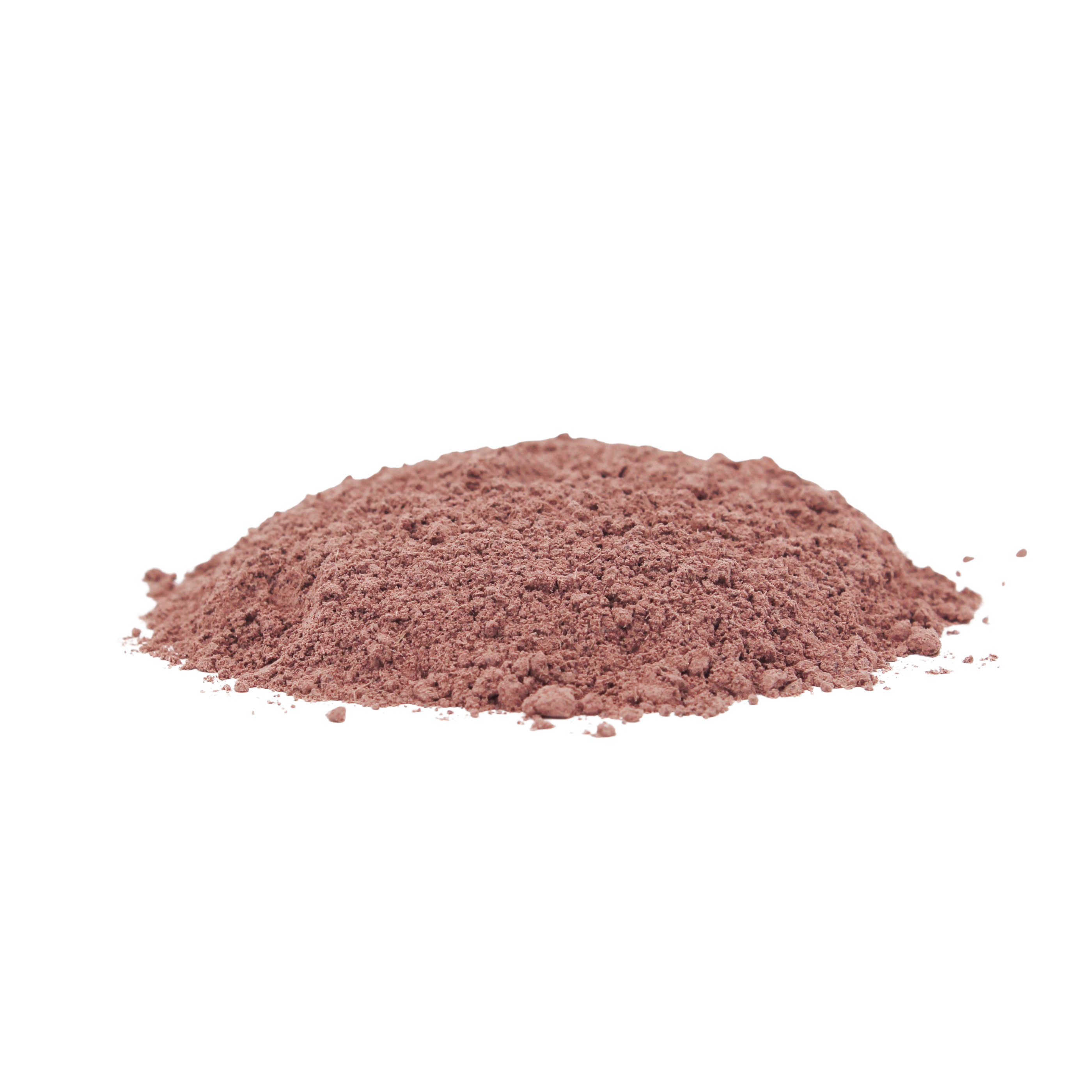
Finely milled Mimosa hostilis root bark powder — an example of MHRB prepared for soap making and botanical skincare formulations
Basic Mimosa Hostilis Soap Recipe
Ingredients
- 500g Olive Oil
- 200g Coconut Oil
- 150g Palm Oil (or sustainable alternative)
- 120g Lye (Sodium Hydroxide)
- 280g Distilled Water
- 30g Mimosa hostilis root bark powder — approx. 3% of total oil weight
Method
Dosage & Formulation Notes
- Starting point: 1–2% of total oil weight for subtle color. 3–5% for deeper color and more pronounced skincare activity.
- Oil infusion method: For maximum potency, infuse MHRB powder in your carrier oil over gentle heat for 3–4 hours. Strain and use the enriched oil in place of powder for deeper color and greater bioavailability of active compounds.
- Color variation: Expect warm tones ranging from tan to deep burgundy-brown. Color often deepens during the cure period.
- Natural exfoliation: At higher concentrations, Mimosa hostilis powder adds a gentle physical exfoliation to the finished bar.
- Fragrance pairing: The natural earthy aroma of MHRB pairs well with lavender, sandalwood, bergamot, and cedarwood essential oils.
- Staining note: Deep pigmentation may lightly stain washcloths at higher concentrations. Worth mentioning to customers.
Why Sourcing Quality Matters
Not all Mimosa hostilis root bark is equal. Bioactive compound concentration varies significantly based on region of origin, harvesting practice, and whether inner root bark has been properly separated from outer bark and stem material. Inner root bark — the reddish-purple layer beneath the outer surface — contains the highest density of tannins, flavonoids, and arabinogalactans.
At The Chill Hawaiian we source exclusively inner root bark from producers in northeastern Brazil and Chiapas, Mexico — the native range of Mimosa hostilis and the regions producing the most bioactively dense material. Every batch is traceable to its origin and ships from within the United States.
Ready to formulate with Mimosa Hostilis?
Premium MHRB powder, shredded, and chips — inner root bark only. Ships same day from the USA.
Shop MHRB PowderFrequently Asked Questions
Is Mimosa hostilis soap safe for sensitive skin?
When properly formulated at appropriate concentrations, yes. The anti-inflammatory properties of Mimosa hostilis actually make it well-suited for reactive skin. As with any new skincare ingredient, patch testing is recommended for those with very high sensitivity.
Does the MHRB powder survive saponification?
Partially — some compounds are altered by the high-pH environment. This is why the oil infusion method is recommended for maximum bioavailability. In standard cold process soap, however, enough active material survives to deliver genuine skin benefits.
Will it stain skin?
Temporary light staining is possible with fresh soap at high MHRB concentrations. This typically diminishes after a full 4–6 week cure. Properly cured bars at standard concentrations rarely cause skin staining issues.
Can I combine Mimosa hostilis with other botanical additives?
Yes. It pairs well with aloe vera for complementary anti-inflammatory action, calendula for enhanced skin regeneration, activated charcoal for deep pore cleansing, and kaolin clay for additional pore-refining. Test in small batches and keep careful formulation records.