As of the most recent systematic reviews, researchers have isolated 145 distinct active metabolites from the genus Mimosa — alkaloids, chalcones, flavonoids, indoles, terpenes, terpenoids, saponins, steroids, glycosides, lignoids, polysaccharides, and fatty esters among them. In Mimosa hostilis specifically — known in northeastern Brazil as Jurema Preta and in Chiapas as Tepezcohuite — the inner root bark is the most chemically concentrated tissue in the entire plant. These compounds do not act alone. They operate as a system, each molecular class contributing a distinct biological function that together produces effects no single synthetic compound has yet replicated in full.
This article is not about traditional use. It is about the documented biochemistry behind what MHRB is actually doing — at the cellular level, in published research, with named compounds and measurable mechanisms.
The bark behind the science.
True inner root bark — chips, shredded, and powder. Ships same day from the USA.
Why the Inner Root Bark Is Different From Everything Else
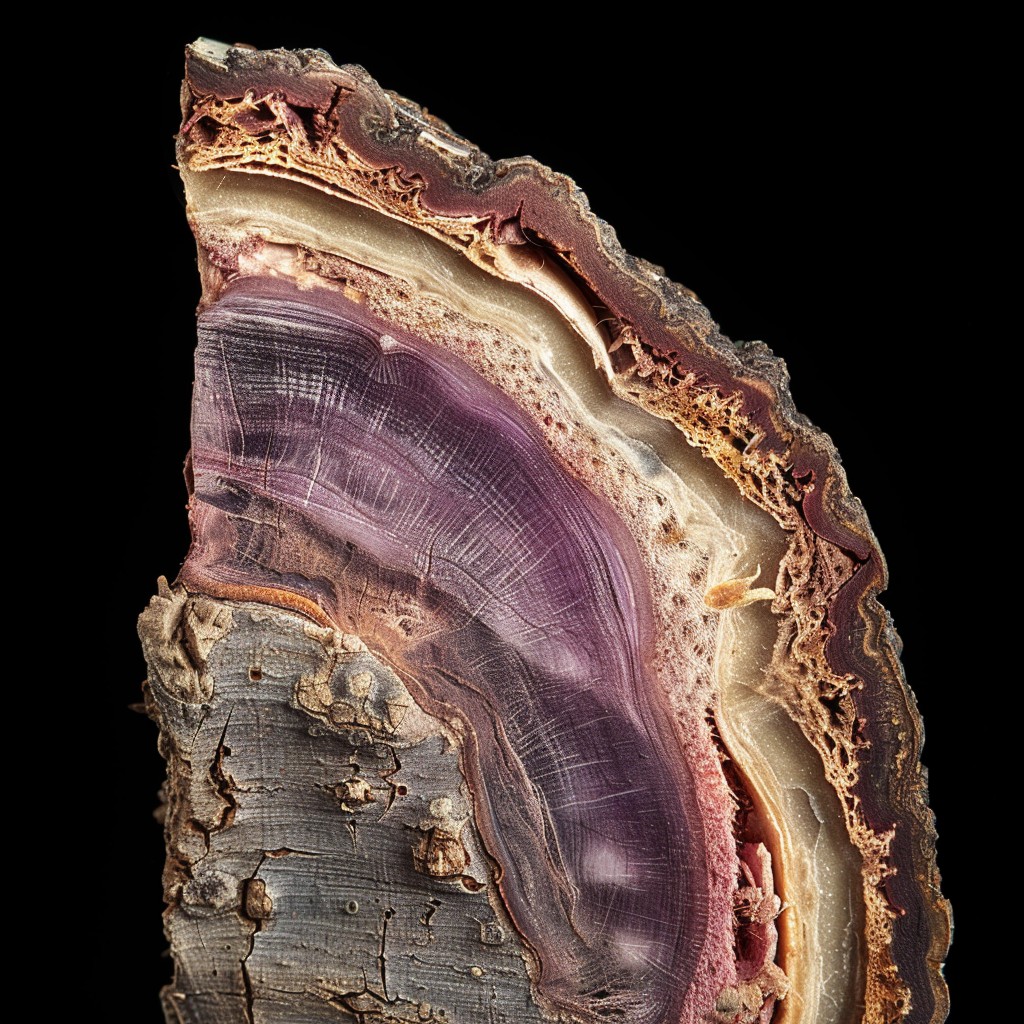
Mimosa hostilis produces bioactive compounds throughout its tissues — leaves, flowers, stem bark, seeds — but the concentration gradient is not uniform. The inner root bark sits at the apex of that gradient. It hosts the highest measured tannin concentrations, the deepest flavonoid density, and the most complex polysaccharide architecture of any tissue in the plant.
This makes biological sense. The root is the tree's primary storage and defense organ. In the Selva Baja Caducifolia of Chiapas and the Caatinga of northeastern Brazil — ecosystems defined by extended drought, poor mineral soils, microbial pressure, and insect predation — a plant's root system is under continuous assault. The chemical arsenal concentrated in the inner bark is the tree's primary response to that pressure. It is not metabolic waste. It is purposeful, evolved biochemistry, refined over millions of years of ecological pressure.
When we extract MHRB and apply its chemistry to craft, skincare, dyeing, or tanning, we are borrowing a defense and repair system that evolution built for exactly those jobs — just for a different biological substrate.
The Tannin Architecture — More Than a Single Molecule
Tannins dominate the conversation around Mimosa hostilis because they are the most abundant compound class and the most industrially discussed. But the popular understanding of "tannins" as a single thing obscures the real picture significantly.
The tannins in MHRB are predominantly condensed tannins — specifically prorobinetinidin-type proanthocyanidins, a structurally specific subclass of polymeric flavonoid. These are large, complex polymeric molecules with molecular weights ranging from a few hundred to tens of thousands of daltons, and their biological behavior changes meaningfully across that size range.
Prorobinetinidin — The Dominant Tannin Class
At lower molecular weights, these tannins penetrate tissue readily — crossing into the dermis, entering the fiber matrix of hides, absorbing into wood grain. At higher molecular weights, they remain closer to the surface, forming a protective film with antimicrobial and astringent properties. In a concentrated MHRB extract, you get the full spectrum simultaneously — surface activity and deep penetration operating in parallel.
The proanthocyanidin backbone also carries chromophore groups — portions of the molecule that absorb specific wavelengths of light and reflect the deep red-purple spectrum that is the visual hallmark of high-quality inner root bark. This is not a separate pigment sitting alongside the tannin. It is a structural property of the tannin molecule itself. You cannot separate the color from the tannin — they are the same chemistry.
Measured tannin concentrations in Mimosa hostilis inner root bark have been documented at levels comparable to quebracho (Schinopsis spp.) — the globally dominant commercial tanning agent, extracted industrially at massive scale precisely because its condensed tannin content is among the highest of any known plant source. Jurema Preta's root bark matches it, with the additional advantage of natural chromophore pigmentation that quebracho lacks.
The Flavonoid Layer — Specific Compounds, Specific Jobs
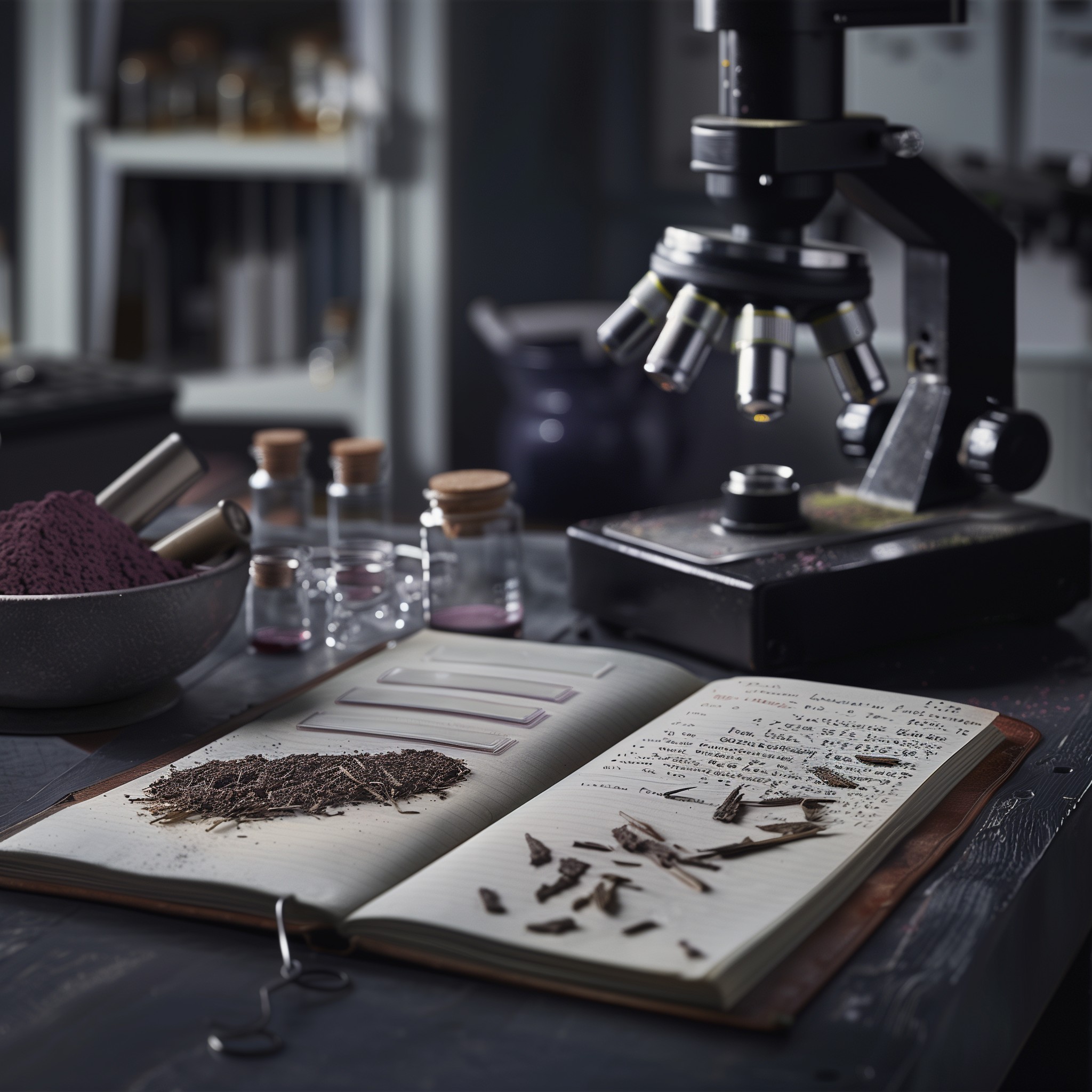
Beyond the condensed tannin matrix, MHRB contains a distinct flavonoid profile that researchers have been systematically cataloguing since the 1990s. Among the most pharmacologically significant are compounds exclusive to this species.
Tenuiflorin A, B & C
Chromone-type flavonoids unique to M. tenuiflora. Tenuiflorin A demonstrated antiprotozoal activity against E. histolytica at IC₅₀ = 41.1 μg/mL in vitro.
Kukulkan A & B
Two chalcones isolated in crystalline form from stem bark — named for the Mayan feathered serpent deity. Anti-inflammatory and antioxidant mechanisms via cytokine cascade inhibition.
6-Methoxykaempferol
A flavonol with documented free radical scavenging activity. Operates through electron transfer pathways alongside quercetin derivatives in the plant's antioxidant system.
Quercetin Derivatives
Dose-dependent inhibition of lipid peroxidation across multiple assay systems. Functions as part of a multi-layered antioxidant architecture operating at different redox potential levels simultaneously.
Naringenin Derivatives
6-methoxy naringenin and related compounds contribute anti-inflammatory activity and complement the flavonoid antioxidant network operating across the full oxidative spectrum.
Condensed Tannin Chromophores
Chromophore-bearing portions of the prorobinetinidin polymer backbone — responsible for the characteristic reddish-purple color that deepens with concentration and mordant application.
This layering matters enormously. A single antioxidant compound protects at one redox level. A compound matrix operating across multiple mechanisms protects the entire oxidative spectrum simultaneously — which is exactly what a plant optimized for survival under extreme UV radiation and heat stress has evolved to do.
The Arabinogalactan Discovery — The Fibroblast Connection
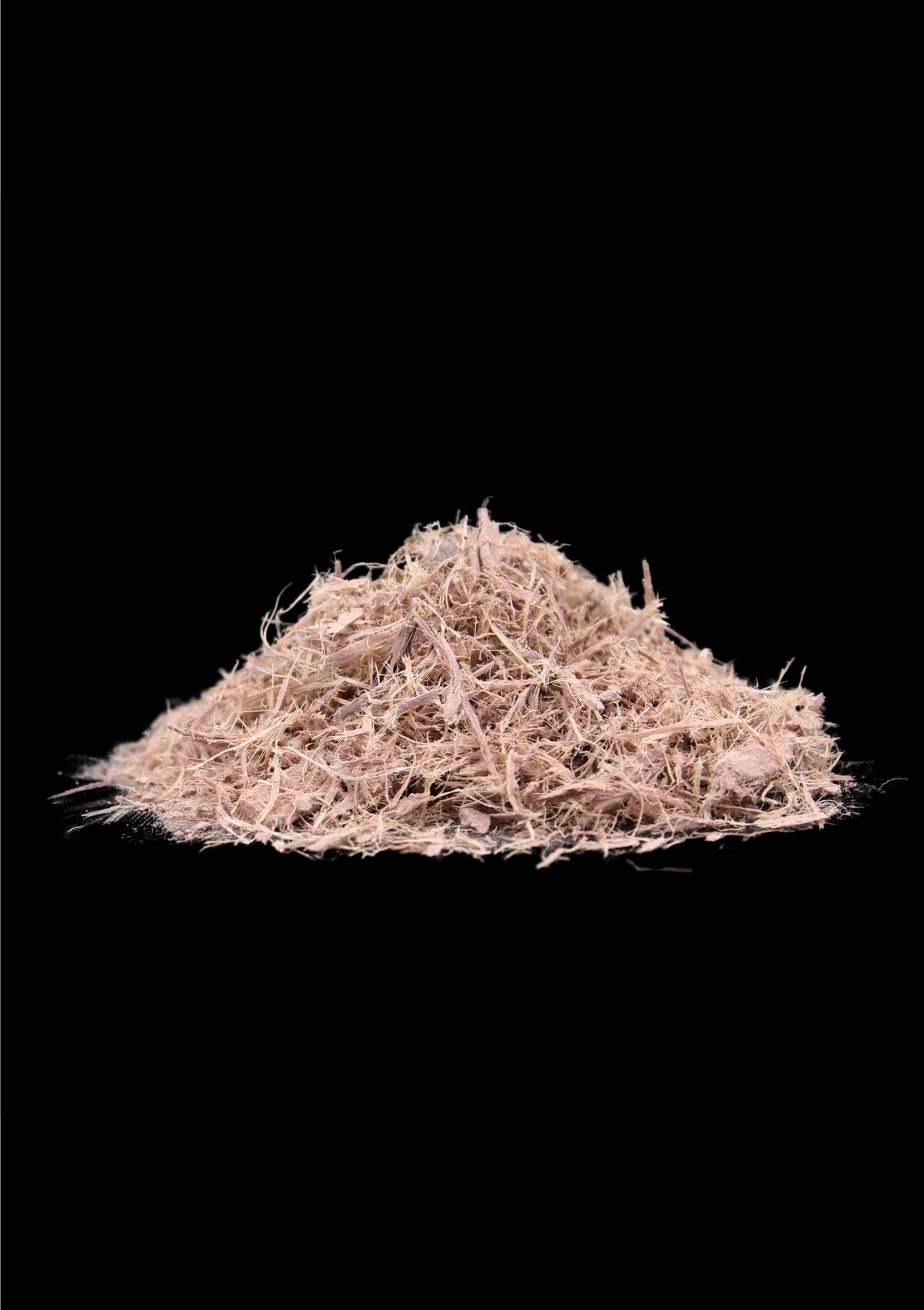
The most clinically significant finding in modern Mimosa hostilis literature is one largely overlooked until 2009, when researchers Zippel, Deters, and Hensel published a landmark investigation in the Journal of Ethnopharmacology: aqueous extracts of M. tenuiflora bark contain significant quantities of arabinogalactan polysaccharides — complex branched-chain carbohydrate polymers with molecular weights ranging from 5 to 140 kDa — and these arabinogalactans demonstrate a specific, dose-dependent stimulation of dermal fibroblast activity and proliferation in vitro.
The significance of this finding is difficult to overstate for anyone working in botanical skincare or wound treatment. Dermal fibroblasts are the cells responsible for synthesizing collagen, elastin, and the extracellular matrix — the structural scaffolding of skin. Stimulating fibroblast proliferation is one of the central mechanisms by which skin repairs itself after injury, and one of the primary targets of high-end cosmetic formulation. Most approaches involve either peptide signaling molecules, growth factors, or retinoid derivatives. Arabinogalactans from a plant bark were not expected to be particularly effective at it.
The Maya called it Tepezcohuite — the skin tree. They arrived at this conclusion empirically, through generations of observation. The 2009 paper put a molecular mechanism behind what they already knew.
The study's conclusion states directly: "A significant in vitro stimulation of dermal fibroblast activity and proliferation by arabinogalactans from Mimosa tenuiflora provides a rationale for the traditional use of the bark material for wound healing." Subsequent research confirmed that MHRB polysaccharides also promote re-epithelialization — the regrowth of the epidermis over a wound — and accelerate the formation of granulation tissue. Immunohistochemical analysis further demonstrated improved angiogenesis: the formation of new blood vessels into healing tissue, which is rate-limiting for wound closure and scar resolution.
Fibroblast Proliferation
Arabinogalactans (5–140 kDa) directly stimulate dermal fibroblast viability and proliferation in vitro — the primary cellular mechanism behind collagen and extracellular matrix synthesis.
Re-Epithelialization
MHRB polysaccharides promote the regrowth of the epidermis over wound surfaces — the biological process by which surface skin closes and barrier function is restored.
Granulation Tissue Formation
Accelerated formation of provisional connective tissue — the structural foundation of wound repair that precedes full tissue remodeling and scar resolution.
Angiogenesis
Immunohistochemical analysis confirmed improved formation of new blood vessels into healing tissue — rate-limiting for wound closure and the delivery of oxygen and nutrients to regenerating cells.
The Saponin Function — Antimicrobial Architecture
The saponin fraction of Jurema Preta inner bark — which includes mimonoside A, B, and C along with saponins A and B — contributes a distinct functional layer: antimicrobial and antifungal surface defense.
Saponins are amphiphilic glycosides — they carry both hydrophilic and lipophilic portions in their molecular structure, which allows them to disrupt lipid-based biological membranes. Microbial cell walls are lipid-based. This is the mechanism by which tannin-rich plants protect themselves from bacterial and fungal infection in demanding ecosystems, and it translates directly to MHRB extract's documented bacteriostatic and fungistatic properties.
In soap making and skincare formulation, the saponin fraction contributes genuine cleansing efficacy — saponins are natural surfactants capable of emulsifying oils and carrying debris away from surfaces. This is not a coincidental cosmetic benefit. It is a structural property of the molecule class, operating through the same amphiphilic mechanism that makes synthetic surfactants work, derived entirely from the plant's own defense chemistry.
Minerals as Cofactors — The Inorganic Layer
One dimension of MHRB chemistry that receives less attention than the polyphenols and polysaccharides is its mineral constituent profile. The bark is a documented source of zinc, copper, and manganese — three trace elements that are not incidental to its biological activity. They are essential enzymatic cofactors in the biochemical pathways that produce collagen and elastin.
| Mineral | Key Enzyme | Biological Role |
|---|---|---|
| Zinc | Collagenase / Matrix metalloproteinases | Governs collagen remodeling and wound matrix turnover — essential for scar resolution and tissue reorganization |
| Copper | Lysyl oxidase | Cross-links collagen and elastin fibers into stable structural networks — without this, fibers form but lack tensile strength |
| Manganese | Manganese superoxide dismutase (MnSOD) | Primary antioxidant enzyme operating inside the mitochondria of skin cells under oxidative stress — protects cellular machinery during repair |
These are not trace amounts with marginal relevance. They represent the difference between a botanical extract that deposits color and fragrance and one that provides measurable biochemical support for the tissue it contacts. The mineral profile of MHRB is consistent with a plant that has concentrated the mineral resources of its calcareous, mineral-present native soils into precisely the tissue that needs them most — the inner root bark.
The Antioxidant System — Multi-Mechanism, Multi-Layer
A 2026 phytochemical study published in Sciences of Phytochemistry evaluated the antioxidant activity of M. tenuiflora root extracts using both DPPH and ABTS radical scavenging assays — two standard in vitro measures of antioxidant capacity. The butanolic fraction produced an EC₅₀ of 2.20 ± 0.45 μg/mL in the DPPH assay. The ethanolic fraction reached 2.25 ± 0.01 μg/mL — values the authors describe as comparable to the trolox pharmaceutical antioxidant reference standard.
The mechanism is not a single compound doing one job. It is the combined action of condensed tannins scavenging free radicals through phenolic hydroxyl groups, quercetin and kaempferol derivatives operating through electron transfer, saponin-associated reduction of lipid peroxidation, and mineral cofactors supporting intracellular enzymatic antioxidant systems. These mechanisms are additive and in some cases synergistic — the presence of multiple antioxidant classes appears to enhance the activity of individual components beyond what their isolated potency would predict.
Why the Full Spectrum Matters
This is one of the central arguments against reducing botanical extracts to single "active ingredients." The complete MHRB profile operates as a system. Tannins scavenge free radicals at the phenolic level. Flavonoids operate through electron transfer at a different redox potential. Saponins reduce lipid peroxidation at the membrane level. Mineral cofactors support enzymatic antioxidant systems inside the cell itself. Isolating any one compound and presenting it as the mechanism misses most of what is actually happening.
What This Means for Craft Applications
For a soap maker working with Mimosa hostilis powder, the condensed tannin fraction provides natural colorant, astringent activity, and measurable antioxidant protection in the finished bar. The saponin fraction contributes cleansing efficacy that complements the soap matrix. The mineral cofactors persist in trace concentrations through cold-process saponification.
For a leather tanner, the prorobinetinidin tannin architecture is simultaneously the tanning agent and the colorant — the same molecular backbone that cross-links collagen fibers in the hide also carries the chromophore groups that produce the characteristic reddish-brown tone. One bath. One botanical. Two jobs.
For a natural dyer, the condensed tannin's affinity for protein fibers — wool, silk, leather — and its compatibility with iron and alum mordants produces a color range from warm golden tan to near-black mahogany driven by genuine chemistry, not surface coating.
For skincare formulators, the arabinogalactan fraction provides documented fibroblast stimulation. The flavonoid matrix contributes multi-mechanism antioxidant protection. The mineral cofactors support the enzymatic machinery of collagen synthesis. This is not a botanically derived claim without mechanism. It is a mapped, peer-reviewed system.
The 145 compounds isolated from Mimosa hostilis are not academic artifacts. They are the reason this bark has been trusted by the Maya, the Kariri-Xucó, and artisan communities across two continents for centuries.
The science is not explaining a new discovery. It is building a molecular vocabulary for something that was never in question — from the emergency treatment of burn victims in Mexico City in 1985, to the soap makers and leather workers and dyers who work with MHRB today.
Ready to work with it?
True inner root bark only. Chips, shredded, and powder — sourced from the Selva Baja Caducifolia of Chiapas. Ships same day from the USA.
Order MHRB Now Questions? Text us anytime — 213-973-2658Frequently Asked Questions
How many compounds have been isolated from Mimosa hostilis?
Systematic reviews of the genus Mimosa have documented 145 distinct active metabolites across the genus, spanning alkaloids, chalcones, flavonoids, indoles, terpenes, saponins, steroids, glycosides, polysaccharides, and fatty esters. The inner root bark of M. tenuiflora (MHRB) represents the highest compound concentration of any tissue in the plant.
What are arabinogalactans and why do they matter?
Arabinogalactans are complex branched-chain polysaccharide polymers found in significant quantities in aqueous MHRB extracts. A 2009 peer-reviewed study in the Journal of Ethnopharmacology demonstrated that arabinogalactans from M. tenuiflora specifically stimulate dermal fibroblast activity and proliferation in vitro — the cells responsible for producing collagen and extracellular matrix. This is the molecular mechanism behind the bark's documented wound-healing and skin-regenerating properties.
What is the difference between condensed tannins and other tannins?
Condensed tannins — the dominant class in MHRB — are polymeric flavonoids that form stable, covalent-adjacent bonds with proteins. They are structurally distinct from hydrolysable tannins (found in oak galls and sumac) and are the class responsible for genuine leather tanning. Their prorobinetinidin structure in Mimosa hostilis is specifically associated with both high tannin bioactivity and the plant's characteristic reddish-purple color.
Why does inner root bark have higher compound concentration than stem bark?
The root system is the plant's primary defense and storage organ — concentrated in the tissue most vulnerable to microbial and environmental attack. Under the stress conditions of the Caatinga and Selva Baja Caducifolia ecosystems, the plant invests heavily in chemical defense at the root level. Compound concentration in inner root bark consistently exceeds stem bark in measured analyses across tannin, flavonoid, and polysaccharide fractions.
Where does your MHRB come from?
We source true inner root bark exclusively from established, selective operations in the Selva Baja Caducifolia of Chiapas, Mexico — the ecosystem where Tepezcohuite has been harvested and understood for centuries. Rotational harvesting only, mature trees only. Ships same day from the United States. Read more about our sourcing process →